Showing posts with label cooking. Show all posts

18 December 2019

4 Tasty Metabolism & Energy Boosting Foods

When it comes to boosting your metabolism and energy levels, there are a handful of foods that you should be eating on a daily basis that help you look and perform better along with giving you more energy and a speedier metabolism for faster weight loss.
The following foods are rich in energy boosting nutrients and contain antioxidants that help speed up workout recovery and fight off and prevent illness and disease.

If you are suffering from low energy levels and have a slow metabolism, start eating these foods on a daily basis to get the most benefit from them. You do not have to eat all of these foods every day, but eating most of them daily is the best way to go.
So without further ado, here are four outstanding and tasty foods to eat often for more energy and a higher metabolism.
1. Berries
Strawberries, blueberries, raspberries and blackberries are all awesome fruits that boost your metabolism and energy levels. You see, most fruits are high in natural sugars which can slow down and prevent fat loss.
However, unlike most fruits, berries are very low in natural sugar which makes them perfect to eat anytime. Berries are loaded with antioxidants, fiber and plant nutrients called phytonutrients, which help increase energy levels by improving your cellular health.
To get the most health benefits from berries, eat a fruit bowl consisting of strawberries, blueberries and blackberries several times a week. This combo packs a powerful antioxidant punch which strengthens your immune system and helps speed up your metabolism and increases your energy levels.

Mixing berries into low-fat or no-fat Greek yogurt makes for a tasty snack or breakfast. Always put fresh berries into your yogurt instead of buying yogurt that already has fruit in it.
Flavored yogurt or yogurt with fruit contains far too much adder sugar and too little fruit, which means you will not get the energy and health benefits that you get from eating fresh berries.
As berries absorb a lot of pesticides, I highly recommend that you spend an extra dollar or two and go with organic berries as they do not contain any harmful pesticides.
2. Walnuts
Walnuts are my go to food for boosting energy levels anytime of day. Walnuts are an excellent source of Vitamin E, fiber and ALA, an omega-3 fat essential for healthy hair, skin and nails. They are also very low in carbohydrates which means you can snack on them at any time of day.
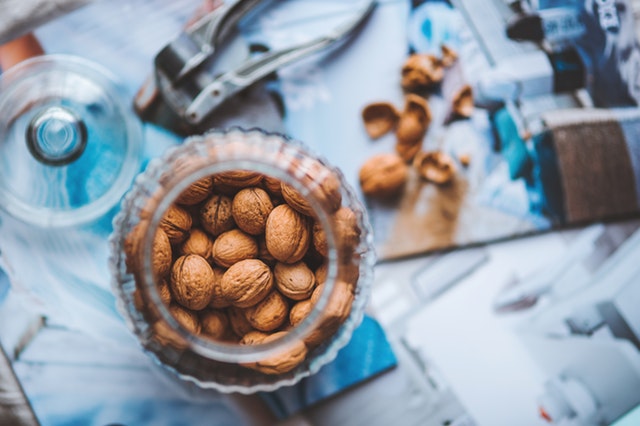
Although Walnuts are high in fat, the fat is mostly from monounsaturated fat, which is a good fat that does not damage your arteries or cause inflammation, which is the leading cause of heart disease.
For best results, snack on a small handful of Walnuts in between meals, 60-90 minutes before bed, or anytime you need an energy boost. Walnuts make a good pair with fresh fruit and dried fruit, just be sure to limit your fruit intake as most foods are high in natural sugar which can interfere with weight loss.
3. Sweet Potatoes
Sweet potatoes far superior to white potatoes when it comes to nutrients and fiber. Sweet potatoes are a nutritional powerhouse as they are loaded with vitamin A, vitamin C and dietary fiber and several other important nutrients.
Most people tend to prefer the taste of sweet potatoes to regular potatoes as they are sweet and can be eaten with many different foods for both lunch and dinner.

Eat sweet potatoes with lean meats and fibrous vegetables such as broccoli, cauliflower, peppers, tomatoes, spinach and other raw veggies several times a week.
The complex carbohydrates in sweet potatoes give you sustained energy without the crash you would get from other foods high in carbohydrates, especially sugar.
4. Coconut oil
Coconut oil is a true Superfood and has countless health benefits along with boosting your metabolism and energy levels so you can power through your workouts.
Coconut oil contains a high amount of unique fats called medium chain triglycerides. These fats are considered fat burning fats and can speed up the burning of body fat quite considerably.
Coconut oil can be used for cooking, as a sauce or dressing, and in smoothies and shakes. For a tasty and quick energy-boosting snack, I like to spread one tablespoon of coconut oil on a whole grain rice cake, then spread almond butter over it and top it with the raspberries or blueberries and sprinkle it with cinnamon.

This absolutely delicious snack contains healthy fats and antioxidants along with fiber and plant nutrients which increase energy during workouts and protect the immune system from exercise induced stress.
Coconut oil can be eaten and consumed in many different ways and with many different foods, don't be afraid to experiment and find the best way for you to eat coconut oil.
There you have it, incorporate the above four foods into your diet on a weekly basis and you will notice a nice increase in energy along with a higher metabolism, leading to better workouts and better results.


Article Source: EzineArticles.com

20 April 2019

5 Tips For Creating Your Own Healthy Recipes

Most people think that all recipes come from Michelin star chefs or are handed down from some distant ancestor. Not only that but if you were to even consider making your own recipe, you would have to go through years of trial and error or training in the woods with some sort of cooking sensei.
What if I told you that with a little bit of planning and some simple diet knowledge, that you can easily create healthy meals for you and your family? Would you believe me? Read on.
Healthy Recipe Tip 1 - Planning is everything!
The thing that separates average and amazing cooking is simply planning. Taking a few minutes each week to plan meals for the following days can make a huge, and I mean HUGE difference.

Healthy Recipe Tip 2 - Steal!
There are literally thousands of recipe books, websites and blogs full of fantastic recipes. Keep all of these recipes in one place and when it comes to shopping for your next week/month, you can pick out the recipes that grab your attention and add their ingredients to your shopping list.
Healthy Recipe Tip 3 - Trim the fat!
Now it's time for you to get creative. Unless the recipes that you have sourced are super healthy, it is now your mission to take out the unhealthy ingredients, and either swap them with a healthy alternative or change the method in which they are cooked i.e. fried ingredients can be grilled etc. Even if they are already super healthy, don't be afraid to swap things you don't like for things you do!

Healthy Recipe Tip 4 - Be brave!
Now we have a healthy alternative to a recipe that you like, go wild and add any ingredients (healthy ones of course!) that you like and throw them in to the mix. The idea is that you will begin to understand really quickly what works together and what doesn't.

Experimenting with herbs and spices is a great way to start, perhaps add a few spoonful's of chilli in to your next casserole and see how it changes the flavour.
Healthy Recipe Tip 5 - Practice makes perfect!
I know that at the beginning of this article I said that you don't have to suffer years of trial and error to be able to create your recipes. It's true! However, don't expect to get it right all of the time. If you follow the tips above, you will make more winners than failures, all you have to do is stay clear on what you and the people that you will be cooking for like and the sky is the limit!

Good luck!


Article Source: EzineArticles.com

21 February 2019

Sprouting For Health

If someone told you that you could produce a food that required no soil or sunshine, can be grown all year round, takes just three or four days to grow, and pound for pound, is one of the most nutritious foods available, would you believe them? On the face of it a reasonable answer would be "no". But there does exist such a food, and it is on the shelf of most supermarkets and you can grow it yourself with little trouble. Of course, I am referring to sprouts.

Seeds from which sprouts grow are potential plants just waiting for the right circumstances in which they can burst forth and realise that potential. When the seed begins to sprout, there is a veritable explosion of nutrients inside the seed. Sprouting of seeds causes a dramatic increase in the amount of vitamins, minerals and protein available, and this increase corresponds to a decrease in the level of carbohydrates and calories. For example, just half a cup of most sprouts will provide as much vitamin C as six glasses of orange juice. Apart from being extremely nutritious, sprouts are very easy to digest because of the fact that the sprouting process converts the starches to simple sugars.

There are significant advantages to sprouts apart from the nutritional ones. They are so easy to grow in a very small space that anyone can do it in the most restricted of areas. They are cheap to grow and provide a harvest within three or four days, so you can have a continual supply on the go all year round. You can supply yourself with wonderful nutrition without the demands of a vegetable or fruit garden. There is no soil to tend, no compost to make and no bugs to repel.

Seeds from most common vegetables can be sprouted and will provide a nutritional bonanza, but tomato and potato seeds are poisonous and should never be eaten. Be very careful though, to only sprout seeds that are packaged for the purpose of consumption, as opposed to planting, because seeds for planting are often treated with toxic chemicals.
Sprouts vary in flavour and a mixture of sprouts can create delicious combinations. The more peppery flavours of mustard and radish sprouts combine well with the more subdued flavours of alfalfa, clover and rye. Lentils, peas and beans are ideal for sprouting, and provide their own distinctive tastes with their nutritional advantages. Seeds from the cabbage family, such as cabbage, cauliflower, Brussels sprouts and broccoli are great to sprout, and in fact one ounce of broccoli sprouts will supply as much anti-oxidant as three pounds of the fully grown vegetable.

To grow sprouts, take a quarter of a cupful of seeds and rinse them thoroughly, drain well, and then place them in a bowl and cover with water and leave overnight to soak. In the morning drain the water and place the seeds in a mesh-covered jar which needs to be placed at an angle to allow for drainage. Rinse the seeds morning and night in clear water, drain and put back into the jar. Exceptions to this rule are soybeans and chickpeas, which need to be rinsed between four and six times per day. Sprouting generally is better in a relatively dark space, but the cereal and grain seeds could do with a few hours of light after initially sprouting to allow for the production of chlorophyll.

If you start a new rotation every day or two, you will have a continual supply of sprouts which will provide you and your family with a wonderful culinary and nutritional advantage with minimal work required.


Article Source: EzineArticles.com

20 June 2018

14 Tips On How To Turn Your Menu Into A Mediterranean Diet Menu

Rather than searching for Mediterranean diet recipes, you might like to bring your normal menu in line with the Mediterranean diet. Here are fourteen tips on how to do so.


Tips for Main Meals:
1. When cooking with oil, always use olive oil - Store it in an oil sprayer to help control how much you use. TIP: light and extra light olive oil are NOT lower in calories. The term 'light' is only used to describe olive oil blends.

2. Steam your vegetables and have roast vegetables occasionally too - Spray roasting tin with olive oil and place cherry tomatoes, red onion, chopped zuccini (courgette), chopped eggplant (aubergine), peppers and red onions in. Spray vegetables with olive oil, sprinkle with basil (either chopped fresh or dried) and black pepper and roast in a hot oven until cooked. Serve with crusty wholegrain bread or pasta.


3. Have ONE glass of red wine with dinner. Be careful though, wine is VERY high in calories. If you don't drink alcohol then select a de-alcoholized version from the grocery store.

4. Choose wholegrain pasta and brown rice rather than white rice and pasta made with white flour - and don't add salt to the cooking.

5. Make your own pasta sauces rather than using store bought ones. Lightly fry one chopped red onion and two cloves of crushed garlic in a little olive oil. When lightly brown, add chopped tomatoes, one tablespoon tomato puree, fresh basil and black pepper. Simmer until tomatoes have softened into a sauce, then serve with wholegrain pasta.


6. Start each meal with salad - One of the most important aspects of the Mediterranean diet is the amount of raw food eaten. Raw foods contain the highest nutrient levels. Cooking foods actually kills nutrients. Be adventurous with salads, add peppers, red onions, grated carrot, celery, rocket, fresh herbs, a little avocado, and baby spinach. Sprinkle with balsamic vinegar to control calories.

7. Instead of buttering your bread mix a little olive oil and balsamic vinegar to use as a dip. You can even marinate the oil by placing it in a bottle with sprigs of rosemary, coriander or basil, small chillies and garlic cloves etc. Cap the bottle and store for a few months. The resulting oil will be infused with the flavors.

8. Add less meat in recipes like stew, soup and casseroles and add beans and extra vegetables to compensate. This will not only make the recipe more healthy, it will also save money.

9. Eat oily fish at least once per week - Fresh is better than canned. Excellent oily fish options include salmon, tuna, sardine, herring, trout, prawn/shrimp etc.


10. Stop using salt as a flavoring! The Mediterranean diet includes little sodium. flavor foods with garlic, fresh herbs, red wine and black pepper. When using salt, always use sea salt rather than table salt. Sea salt contains many trace elements that the body needs that table salt lacks.
Tips for Snacks:
1. Swap biscuits, cakes and crisps for fresh fruit or a handful of raw, unsalted nuts or seeds as a snack.
2. For a delicious snack serve raw vegetables (carrots, celery, broccoli etc) with homemade tzatziki - Mix low-fat Greek yogurt with crushed garlic, lemon juice, grated cucumber and black pepper to taste.

Tips for Dessert:
1. Commit yourself to eating five serves of fruit and vegetables per day
2. Try fresh fruit salad with low-fat natural yogurt and a drizzle of honey for breakfast or desert.


Article Source: EzineArticles.com

1 June 2018

Nutritional Yeast - What Is It And How To Use It

So, you've made the jump from vegetarian to vegan. You have decided to live without dairy, but you have this huge craving for cheese! You can either ignore it or find a way to satisfy that craving. My suggestion is to satisfy it!
Now, the question is how. Maybe you have heard of a product called Nutritional Yeast. But, what is it and how do you use it?
Photo: Medsaludin.es

Nutritional Yeast is an inactive yeast that is yellow and comes in either a dry, flaky texture or a powder. It is made by culturing the yeast with a mixture of beet molasses and sugarcane. Most brands are fortified with B12, which is helpful to vegetarians and vegan since that is sometimes the hardest thing to get from our diet alone. It is also naturally low in fat and sodium.
The best thing about Nutritional Yeast is that it has a naturally wonderful nutty cheesy flavor. So, it's easy to make a great cheesy dish using this.
Photo: Pinterest.com

Where do you find this stuff? It's actually a little more common than you might think. A few groceries stores are starting to carry it, if they have a health food section. Usually, it can be found a local health food store. It's great if you can find it in bulk because it's a lot cheaper. If all else fails, there is a few places online that sell it and can ship it to you.
So, what kinds of things can you make with it? Well, you can sprinkle it on popcorn, mix it into scrambled "eggs", mixed it into mashed potatoes, put it on top of spaghetti, stir it into soups, and add it to pizza. I could go on and on. My favorite way is to make a sauce with it and make macaroni and cheese. You can use it to make nachos, pour on veggies, pour it on casseroles, lasagna, or baked potatoes. The possibilities are endless with this stuff!
Photo: Saomaicentre.info


Article Source: EzineArticles.com

Nutritional Facts About Probiotics

Do you know why you should be using probiotics? Probiotics has been around for a long time and there are still some people that are not upda...